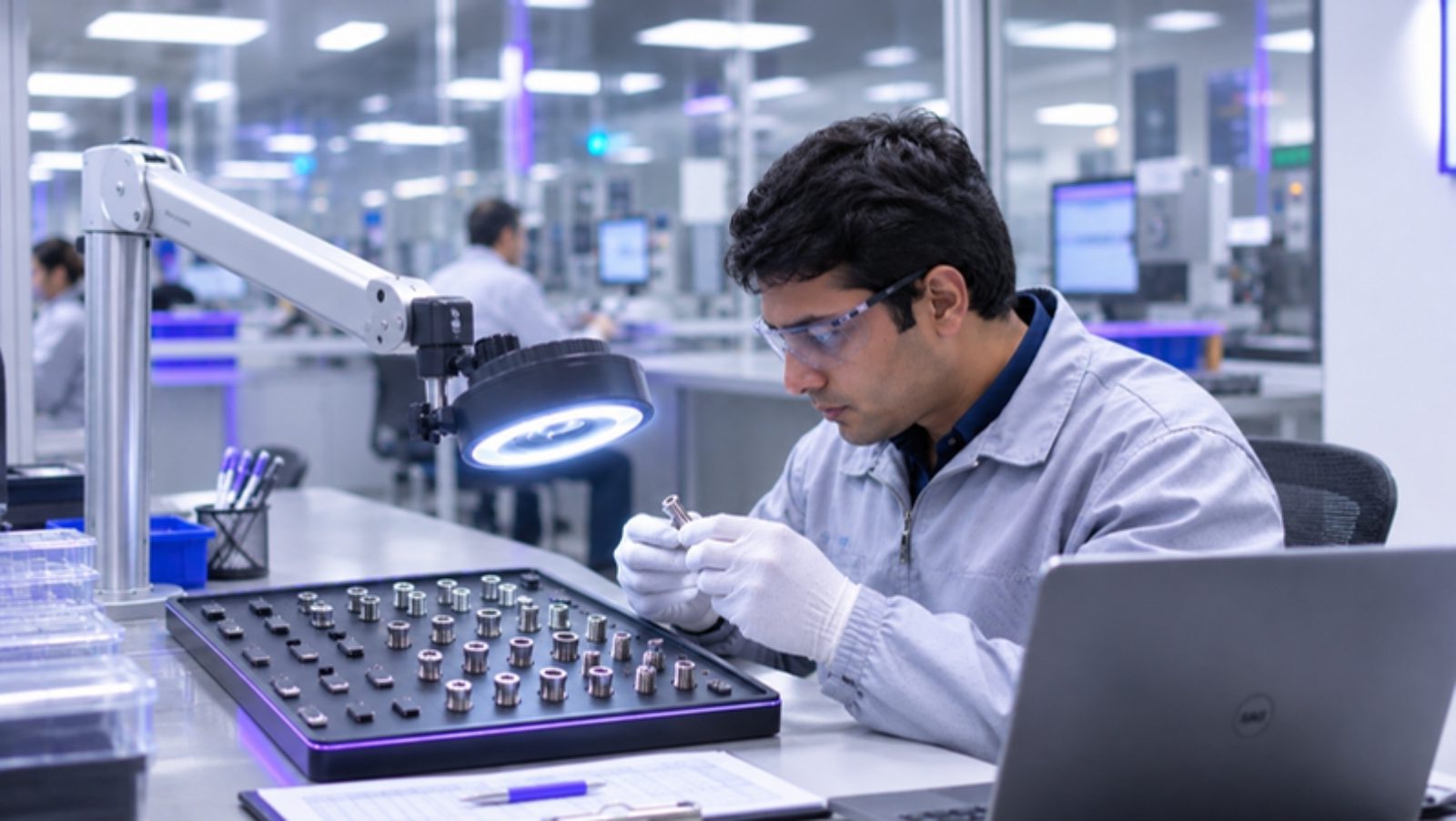
Precision Engineering
Tight tolerances demand consistent execution.
Precision manufacturers work to tolerances where small variations in setup, handling or inspection decide between a conforming part and scrap.
Dheera brings consistency to critical manual steps and connects component quality data back to the manufacturing process.
When tolerances are tight, small variations have a high cost.
High-value materials, complex machining operations and demanding customer specifications leave little room for setup or process errors. Manufacturers need reliable execution and early visibility into quality risks.
Setups and changeovers can introduce variation before production begins.
Incorrect tools, fixtures or programs can compromise high-value components.
Manual measurement and inspection can vary between operators.
Scrapping or reworking precision components is costly, and customers expect complete inspection records.
Dheera helps Precision Engineering manufacturers hold tight tolerances through consistent setups, verified execution and earlier visibility into component quality.
Use cases in Precision Engineering
Self-correcting manufacturing for setups, machining and inspection.
Fixture setup and tool-selection verification
Verify that fixtures, tools and programs match the job requirements before the machining cycle begins, helping prevent setup errors that can damage high-value parts.
In-process inspection and defect identification
Support AI-assisted visual inspection of critical component features during production, helping teams identify visible defects earlier.
First-article inspection support
Structure first-article inspection activities and capture supporting visual evidence and records for review against defined requirements.
Mold setup and furnace-charge verification
Verify mold setup, charge identity and critical preparation steps before casting, forging or heat-treatment cycles begin.
Process drift and quality correlation
Track visual quality observations over time and connect emerging component-quality patterns with manufacturing activities to help teams investigate potential process drift.
Questions about how Dheera can help the Precision Engineering industry
How can AI improve quality control in precision engineering?
AI-powered Visual Intelligence helps manufacturers verify critical manual operations and inspect components for visible defects. It supports more consistent inspection, earlier identification of quality issues and better visibility into manufacturing processes.
Can Dheera help verify CNC machine setups and tool selection?
Dheera can support visual verification of defined setup activities, including checking fixtures and tools against job requirements before machining begins. This helps identify potential setup errors before they affect high-value components.
How can manufacturers detect process drift before components fall outside tolerance?
Dheera can connect visual quality observations with available manufacturing data to help identify emerging patterns and potential process drift. This gives teams an opportunity to investigate changes before they result in greater scrap or rework.
How does Dheera support self-correcting precision manufacturing?
By connecting setup verification, in-process inspection and process-quality insights, Dheera helps teams identify issues earlier, investigate their causes and improve execution. This supports a continuous feedback loop between manufacturing operations and component quality.
What if your next quality win starts with one camera?
Start with one critical process. We'll show you how Dheera can guide frontline teams, identify meaningful deviations and support corrective action, demonstrating the value it can bring to your operations.
- A walkthrough built around one of your critical processes
- How Dheera fits your cameras, workflows and systems
- A clear view of the potential value for your operation